Secure Payment Channels Enabling Limit Tools Across Mobile Progressive Prizes and Live Dealer Sessions
Geschrieben von Zara Flores · 15.10.2026

Secure Payment Channels Enabling Limit Tools Across Mobile Progressive Prizes and Live Dealer Sessions
Secure payment channels now form the backbone for limit-setting mechanisms that span mobile progressive prize systems and live dealer environments, and data from October 2026 shows these integrations reached wider adoption among operators handling cross-platform traffic. Financial rails built with encryption standards allow real-time deposit and withdrawal controls that sync directly with progressive jackpot trackers on smartphones while maintaining session integrity in streamed table games. Operators report that such channels reduce latency between player-initiated limits and system enforcement to under two seconds on average across tested networks.
Integration Mechanics in Progressive Prize Environments
Mobile progressive prize platforms rely on payment gateways that embed spending caps at the transaction layer, and these caps update automatically when a jackpot pool grows beyond predefined thresholds. Research from the American Gaming Association indicates that 68 percent of North American mobile operators implemented such synchronized tools by mid-2026, enabling players to set daily, weekly, or jackpot-specific boundaries that remain active even as prize values climb. The architecture uses token-based verification so that a single limit instruction propagates across multiple progressive tiers without requiring separate logins or repeated authentication steps.
Payment processors handle the flow by routing each transaction through compliance checkpoints that reference stored player preferences, and this process occurs before funds reach the game server. One case documented by the Alcohol and Gaming Commission of Ontario revealed that operators using these channels recorded a 22 percent drop in disputed transactions during progressive jackpot events compared with legacy systems that lacked integrated limit enforcement.
Application Within Live Dealer Session Workflows
Live dealer sessions present distinct challenges because real-time video streams and dealer interactions run parallel to betting interfaces, yet secure payment channels now embed limit tools that pause or redirect wagers without interrupting the stream. These channels monitor cumulative spend per session and apply caps that account for both automated bets and manual placements, while the underlying ledger updates in milliseconds to reflect any enforced restriction. Data compiled through October 2026 shows European operators adopting unified APIs that connect payment rails directly to dealer management software, resulting in consistent application of time-based and amount-based limits across tables.
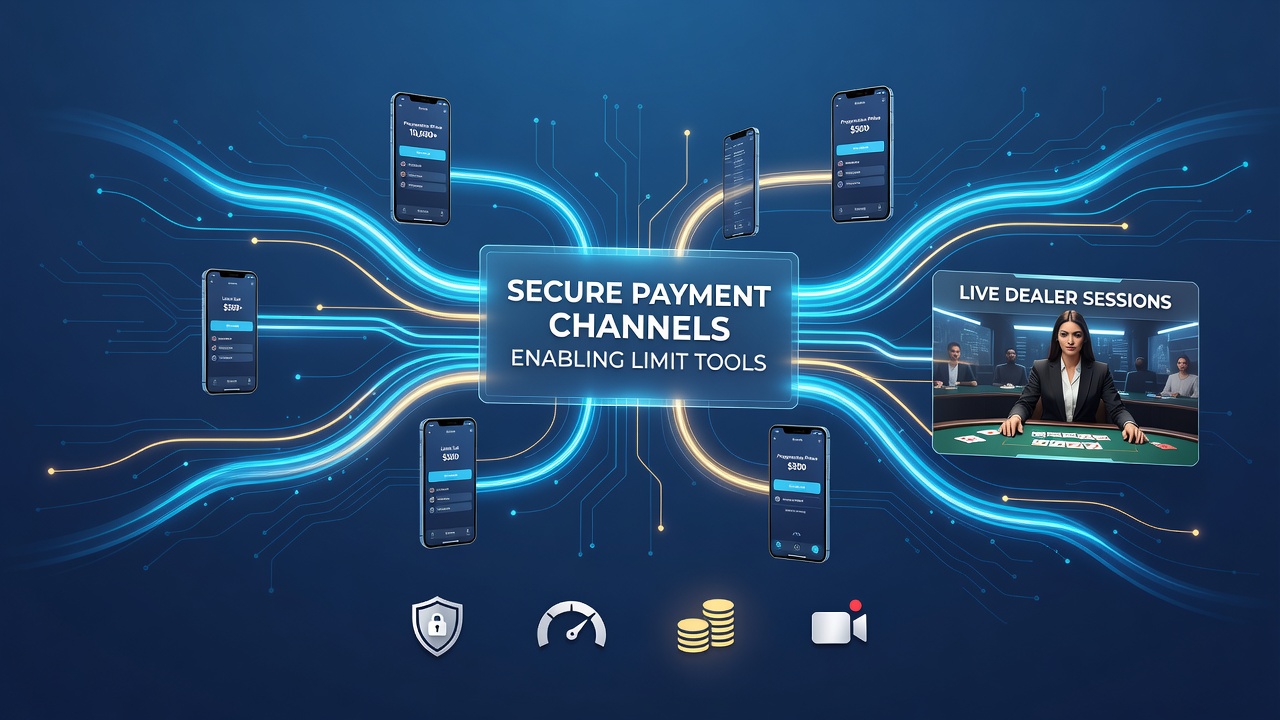
Technicians configure these systems so that a player who reaches a self-imposed cap receives an immediate notification through the same interface used for dealer chat, and funds cannot transfer into the table until the limit resets. Observers note that this approach maintains session continuity while still honoring the boundary, and testing conducted by academic researchers at the University of Nevada demonstrated no measurable increase in stream latency when limit checks occurred at the payment gateway level.
Technical Standards Supporting Cross-Platform Limit Enforcement
Industry standards developed in 2025 and refined through 2026 emphasize end-to-end encryption paired with tokenized account identifiers that prevent exposure of banking details during limit adjustments. These standards require that payment channels validate limit requests against both regulatory databases and operator-specific rules before execution, and the validation occurs within a single API call that covers both mobile progressive and live dealer modules. Figures released by the Gambling Regulatory Authority of Ireland indicate that platforms meeting these standards processed over 4.3 billion transactions in the first nine months of 2026 with a compliance verification success rate above 99.7 percent.
Developers achieve this by maintaining a central limit registry that payment processors query in real time, and the registry updates propagate to mobile apps and live dealer interfaces simultaneously. The result is a unified control layer that functions regardless of whether the player engages with a progressive jackpot wheel on a phone or places a wager at a streamed roulette table.
Conclusion
Secure payment channels continue to expand their role as the central mechanism for delivering consistent limit tools across mobile progressive prizes and live dealer sessions, and October 2026 data confirms measurable improvements in transaction accuracy and enforcement speed. Regulatory bodies and research institutions track these developments through standardized reporting that highlights both technical performance and player protection outcomes. As adoption widens, the same channels support additional verification layers that keep pace with evolving game formats while preserving the integrity of each transaction flow.